Cooking rice outdoors can be a frustrating game of luck. One minute the bottom is burnt, and the next the top is still hard. If you love a warm, fluffy bowl of rice at camp, a titanium camping rice cooker might be the lightweight fix you’ve been looking for. In this guide, we’ll look at why camp rice goes wrong, and how a smart double-layer design makes it nearly foolproof.

Why Rice Matters Outdoors
For many campers, a meal isn’t a meal without rice. In northern China, people grow up on flatbreads, noodles, and steamed buns, which are easy to pack and taste fine hot or cold. In the south, rice comes with almost every meal. Rice has been a staple for thousands of years and feeds nearly half of the world’s population, across East, South, and Southeast Asia and beyond.

So it’s no surprise that rice lovers will carry a pressure cooker, or even an electric rice cooker, just to enjoy a proper bowl on the trail. But does cooking rice outdoors really have to be this hard?
Why Is It So Hard to Cook Rice While Camping?
1. Scorched bottoms and raw tops
At home, an electric rice cooker handles everything. You add the rice and water, and the machine does the rest. Outdoors, you’re using a canister stove and a gas canister, and the flame isn’t nearly as even as a home burner.
If the pot is too thin, the heat is uneven. The rice in the center burns while the rice on top and at the edges stays raw.

A thin aluminum lunch box is a good example. It heats unevenly, so the center burns while the edges stay hard, and the failure rate is high.
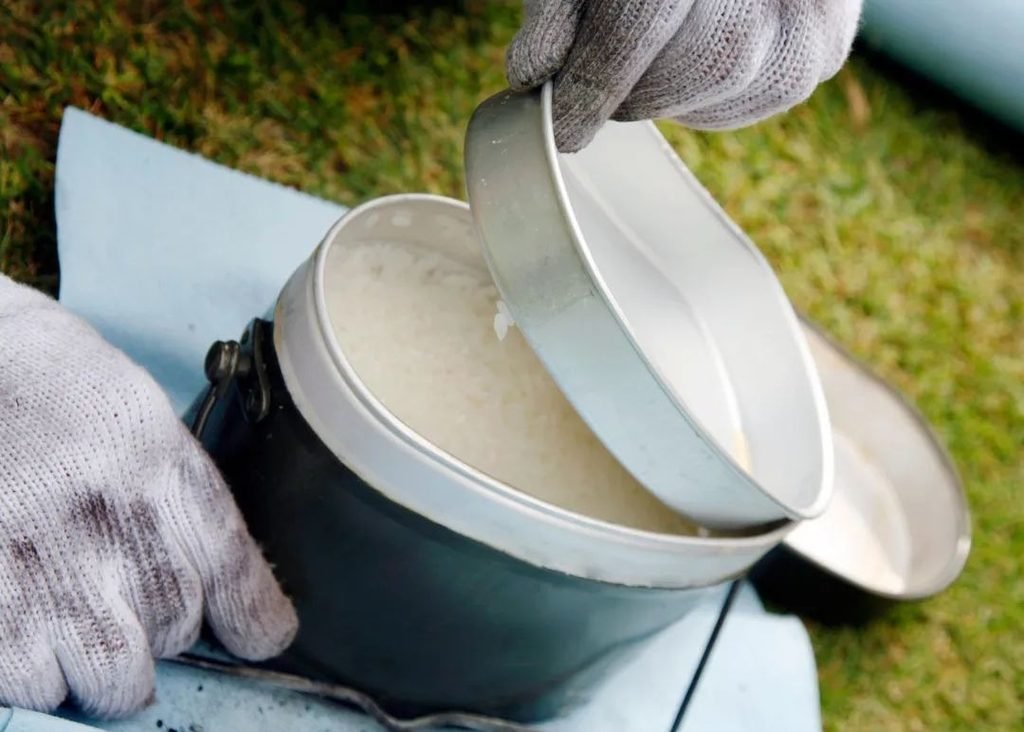
The traditional “steam and rest” method can work, but it takes experience and the right stove.
2. Weight and bulk
Heavy cookware heats more evenly. Some outdoor shops sell cast iron rice pots that cook beautifully, but they are very heavy and not really made for carrying on your back.
A mini pressure cooker is another option. These are designed for high-altitude cooking, where water boils at a lower temperature, but they are heavy and bulky. A typical model weighs about 1 kg and takes up around 8 liters of space. If you try to keep your pack under 10 kg and 55 liters, that one pot uses about a tenth of your weight and a sixth of your volume.

An electric rice cooker is even harder to carry. It only makes sense if you’re car camping next to your tent with a power bank.
3. Durability
This applies to every piece of outdoor gear. At home, if something breaks you can replace it or eat out. In the backcountry, a broken pot can mean going hungry. That’s why many brands use heavy materials like cast iron: they’re sturdy, long-lasting, and heat evenly. But if you want gear that is both light and strong, you need to look at the material itself.
Meet the Titanium Camping Rice Cooker
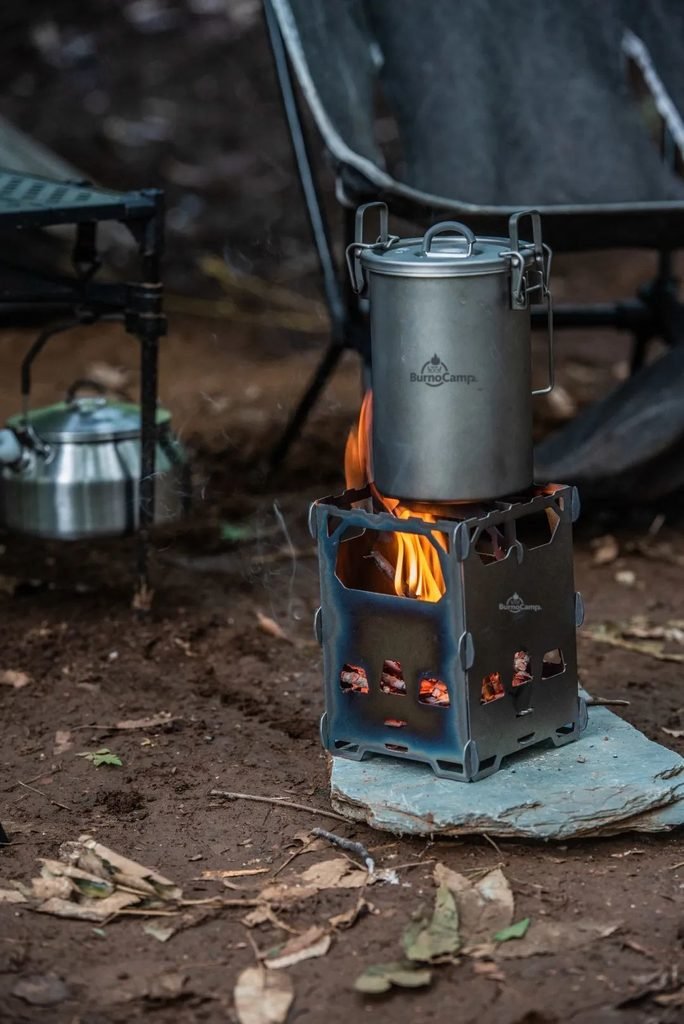
That’s where titanium comes in. The Burnocamp titanium mug with lid is made from pure titanium and weighs only about 280 grams, roughly a quarter of the weight of a mini pressure cooker. Its maximum capacity is 900 ml, and it can steam up to 280 grams of dry rice, which is enough for two people.
It has a double-layer design, so the rice is steamed rather than boiled directly over the flame. That gives you even heat and makes it much harder to burn the bottom. Titanium is also strong and resistant to rust, so it handles the knocks and bumps of life on the trail.

How to Cook Rice in a Titanium Camping Rice Cooker
The whole process is simple and follows the same steps every time, which is exactly why it works:
- Add rice and water to the inner layer. The inside wall has measuring lines for rice and water, and small holes let you check that the ratio is right. Any extra water drains into the outer layer, which helps prevent dry-burning.
- Add water to the outer layer. There’s no strict amount here. Because the rice is steamed, you can add a little extra. The outer water never enters the inner layer, and it keeps the cooker from drying out.
- Close the lid and lock the latches. Then place it on your stove.
- Heat on high until it boils. When steam starts coming out of the small hole in the lid, turn the heat down to low.
- Set a timer for 18 minutes. That’s it. Pour out any extra water from the outer layer, and your rice is ready.

Works With Any Heat Source
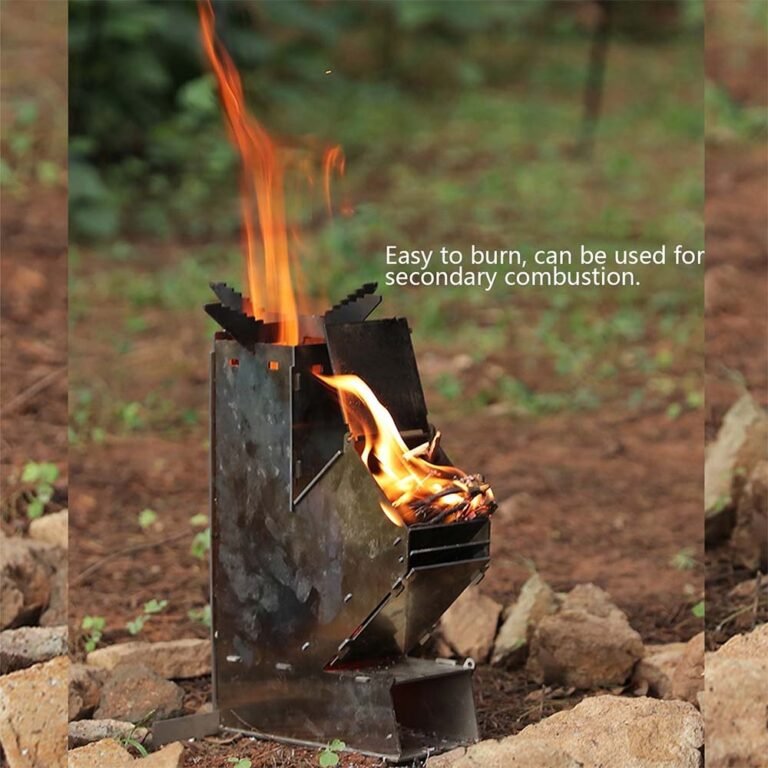
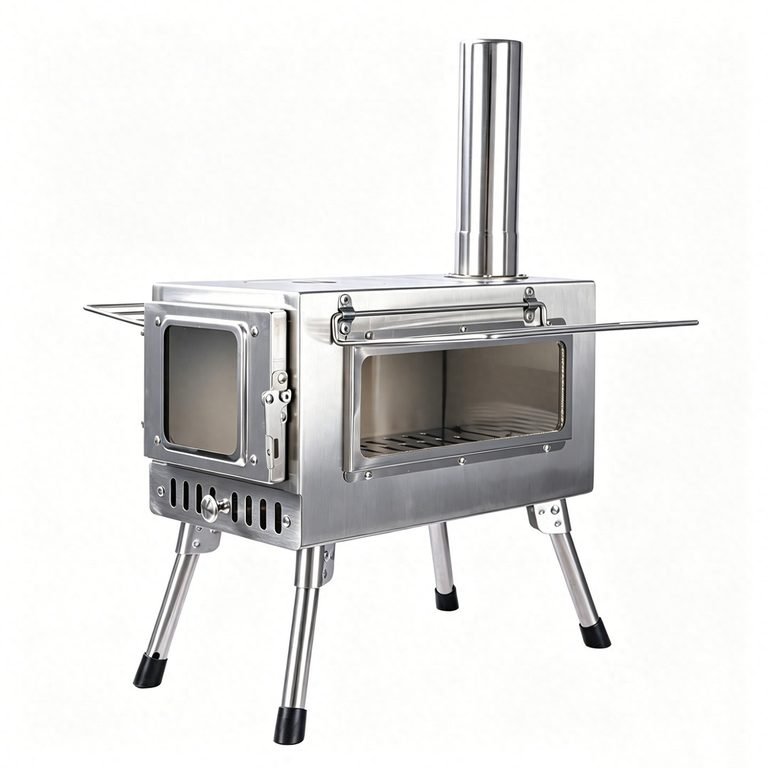
Titanium handles high heat well, so you aren’t limited to one type of stove. It works on a gas stove, and also on a wood stove or over charcoal. Just be careful with the titanium handle, because it gets hot. If you’re putting together a full kit, take a look at our camping cookware too.
A Simple Upgrade: Sausage Rice
You can do more than plain rice. Slice some Chinese sausage and add it with the rice before cooking, and you’ll get a pot of fragrant sausage rice. There are plenty of other one-pot ideas to try: add vegetables, mushrooms, or a little oil and salt, and see what you can come up with.
Final Thoughts on the Titanium Camping Rice Cooker
Cooking rice outdoors doesn’t have to be hard. A titanium camping rice cooker solves the three big problems at once: it steams the rice evenly so it doesn’t burn or stay raw, it weighs very little, and it’s tough enough to last. If rice is a must-have at your campsite, the Burnocamp titanium mug with lid and foldable handle is worth a place in your pack.