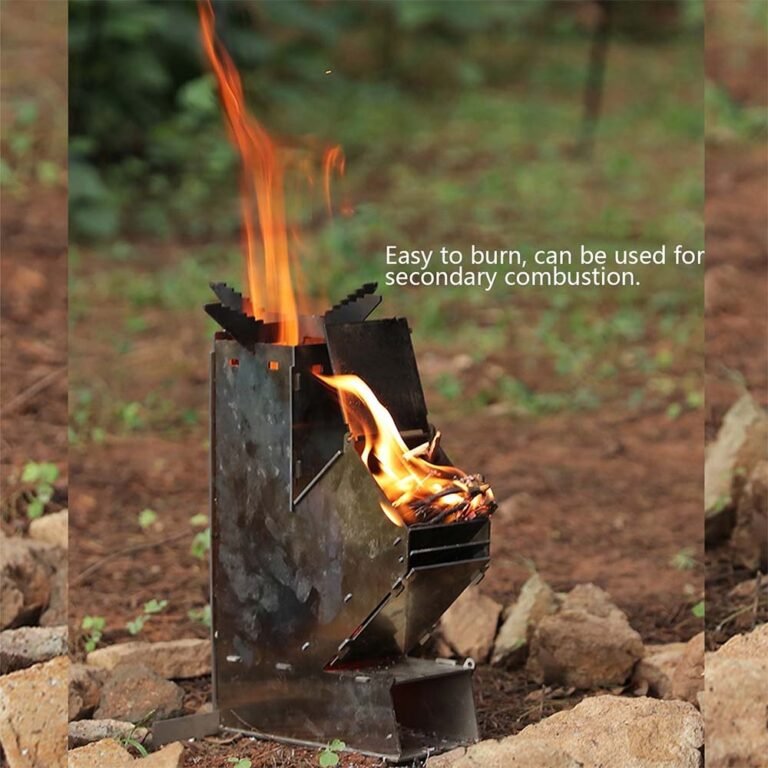
What’s the worst thing about camping in the rain? It’s not a leaky tent. It’s a stove that won’t light, belches smoke, or gets soaked the moment you turn your back. Many beginners think that owning a stove means they can cook and stay warm anywhere, then a rainy day proves them wrong. In this guide, we’ll look at how a camping wood stove really performs in wet weather, which mistakes to avoid, and how to do it right.

Why Is It So Hard to Light a Camping Wood Stove in the Rain?
Start by understanding the three biggest problems. Once you know them, they’re easy to solve.
1. Wet fuel is enemy number one
Damp logs and soggy twigs simply won’t catch. Even if you manage to get them going, you’ll end up with thick smoke that stings your eyes. Pack a supply of dry backup firewood before you leave, and keep it in a waterproof bag inside your backpack.
2. Stove design affects rain protection
A one-piece stove with no cover lets rain pour straight into the firebox, and the flame goes out in seconds. A folding camping wood stove with a removable top plate or a rain shield keeps the inside much drier, so the fire stays alive.
3. The chimney position can make or break your fire
Wind direction in rainy weather keeps changing. If the chimney isn’t designed well, smoke can blow back into your campsite. That’s unpleasant, and it also makes it harder to keep the fire going. Look for a stove with a secondary combustion design. It burns fuel more completely, so there’s less smoke and it’s less likely to blow back.
Wind-Resistant and Damp-Resistant Doesn’t Mean Rain-Proof
Even the best stove needs a little help. Here are three habits that make a big difference:
- Choose the right type of stove. A portable folding stove or a separate, car-camping style stove with a sensible structure and built-in wind panels will hold steady in wet weather.
- Set up a simple rain shelter. Use a tarp to make a sloped canopy, and place the stove underneath. It keeps the rain off while still letting air flow through.
- Check the stove before you light it. Make sure there’s no standing water inside and that the old ash has been cleared out. Damp ash can crack or pop when it gets hot.
Important safety reminder: No matter how good your camping wood stove is, never use it inside a tent. Always use it outside, in an open, well-ventilated area. In the rain, keep it well away from the tent entrance, because carbon monoxide can build up and become dangerous.
Long-Term Care: Maintenance Matters More Than You Think
- Cool it completely before packing. Leftover heat can ignite items in your bag.
- Clear out the ash. Pay special attention to the chimney and the carbon buildup at the bottom, which can block airflow next time.
- Store it somewhere dry and airy. Dampness leads to rust.
- Check the joints regularly. Folding models get taken apart often, so make sure the connections are tight and nothing is bent or leaking.
Which Camping Wood Stove Is Right for Your Trip?
The best stove depends on how you camp. Use this quick guide to match your style:
| Your trip | Recommended stove type | Key benefit |
|---|---|---|
| Solo hiking | Mini folding wood stove | Lightweight and easy to carry; folds down to about the size of your hand |
| Overnight trip for two | Secondary-combustion, low-smoke wood stove | Steady heat with less smoke in your face |
| Car camping with a group | Separate, large-capacity wood stove | Add wood without letting the fire die, great for soups and stews |
| Open-air warmth in fall and winter | Windproof wood stove with wind panels | Strong wind resistance, with heat that stays focused |
Not sure where to start? Our guide to choosing a camping stove compares the main types. And if you’d like a backup for days when firewood is just too wet, a gas stove doesn’t depend on dry wood at all.
Final Thoughts on Using a Camping Wood Stove in the Rain
A good camping wood stove should handle the rain, but it also needs to withstand high heat, resist rust, and pack away easily. Look for thick, solid metal and strong welds, because those details show up when conditions get wet. You can browse some options in our wood stove collection.
The best stove isn’t the one with the loudest sales pitch. It’s the one that works when you actually use it. Pair it with the right camping cookware, keep your fuel dry, and rainy days become a chance to enjoy hot tea, a warm meal, and a cozy campsite.