High altitude cooking can feel like a kitchen prank. The water is bubbling like crazy. The rice is still crunchy. The eggs have been in the pot forever, and the yolk is still soft. You’ve been stewing meat for three hours, and it’s tough as a boot.
If you’ve ever cooked in Tibet, Qinghai, the Andes, or on a mountain camping trip, you’ve probably thought, “Maybe I need a bigger flame.” But the fire isn’t the problem. The real culprit is the thin layer of air above your head. Let’s break down why high altitude cooking is so tricky, and what actually works.

Water Doesn’t Always Boil at 100°C
Most of us learned that water boils at 100°C. So when we see a rolling boil, we assume the water is 100°C hot.
That’s only true at standard atmospheric pressure, which is roughly what you get near sea level. Change the air pressure, and the boiling point changes too. This is the heart of every high altitude cooking problem.
Why Altitude Lowers the Boiling Point
Air has weight. Near sea level, the air above you presses down with a force of about ten tons on every square meter. You don’t feel it, but that pressure helps keep water molecules in the pot, so the water has to get very hot before it boils.
The higher you go, the less air sits above you, and the lower the pressure gets. Water molecules escape more easily, so the water boils sooner. As a rough rule, the boiling point drops by about 1°C for every 300 meters you climb.
In Lhasa, at over 3,600 meters, water boils at around 88–90°C. At higher camps, it can boil in the low 80s°C.
“Boiling” Is Not the Same as “Hot”
Here’s the key idea behind high altitude cooking: bubbles don’t cook your food, heat does.
At altitude, the water can look fully boiling while sitting at a temperature that’s simply too low for the job. Two things go wrong:
- Rice and noodles: Starch needs enough heat to absorb water, swell, and soften (this is called gelatinization). At 85–90°C, it happens very slowly, so you get hard, undercooked grains.
- Meat and beans: Tough cuts like beef and lamb are full of collagen. It needs temperatures close to 100°C, plus a long cooking time, to break down into soft, juicy tenderness. Below that, the meat just stays tough.
Why a Bigger Flame Won’t Save You
Once water hits the boiling point for your altitude, extra heat mostly turns into steam and floats away. The water temperature stays stuck at the same level. A bigger flame won’t make the water hotter. It will only burn through your fuel faster.
So what does help? Here are five fixes that work for high altitude cooking, from the most effective to the easiest.
5 Easy Fixes for High Altitude Cooking
1. Use a pressure cooker
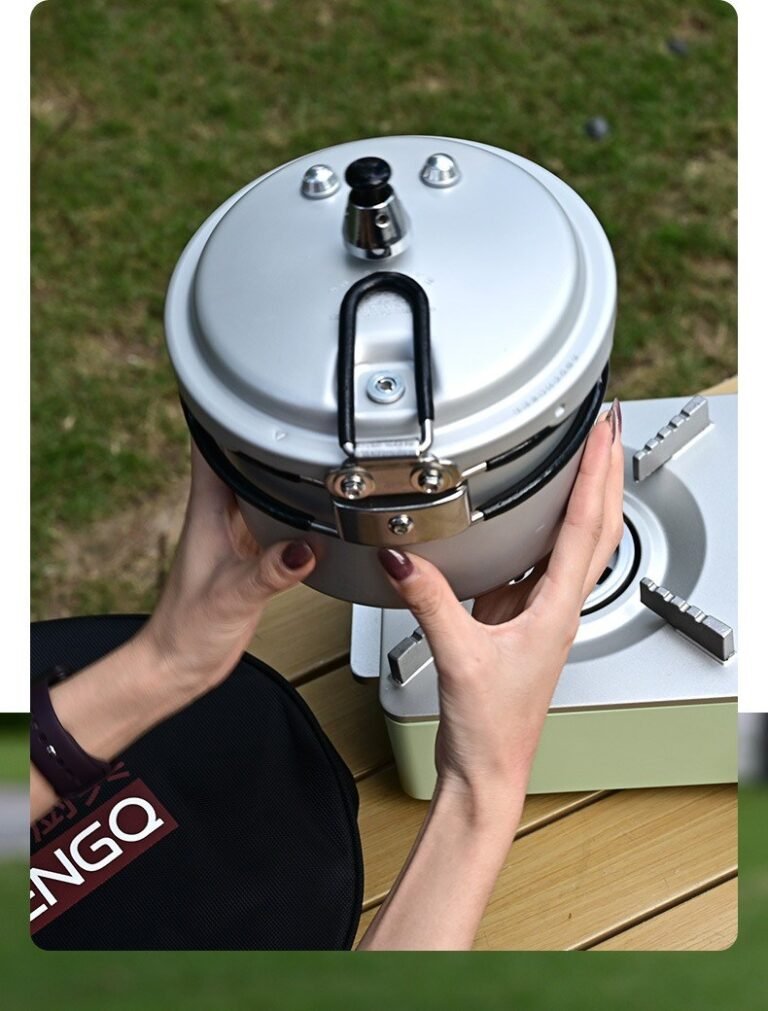
This is the most reliable fix. A pressure cooker traps steam, which raises the pressure inside the pot. Higher pressure raises the boiling point, so the water can reach well above 100°C again. That’s why pressure cookers are a staple in mountain kitchens. They cut cooking time for beans, stews, and tough meat dramatically.
For camping, a compact one is easier to carry. A 20cm outdoor pressure cooker is a good size for one to three people and works on most portable stoves.

2. Soak rice and beans first
Soaking rice for 30 minutes (and beans for several hours or overnight) lets water seep into the grains before they hit the pot. The starch then needs less heat and time to cook through. It’s a simple trick that makes a big difference when you’re cooking at a lower temperature.
3. Cut food into smaller pieces
Smaller pieces mean heat reaches the center faster. Slice meat thinly, chop potatoes and carrots into small cubes, and break up large vegetables. You’ll shorten the cooking time without needing more heat.
4. Keep the lid on and add extra water
A tight lid keeps heat and steam in the pot. At altitude, water also evaporates faster, so start with a little more water than usual, and top up if needed. Plan on a longer cooking time too. Rice that takes 15 minutes at sea level may need 25 to 30 minutes in the mountains.
5. Use steady, protected heat
Wind and cold air steal heat from your pot, and that matters even more when your water is already a little cooler. Use a windscreen and a stable gas stove so the heat stays steady. If you’re not sure which stove fits your trip, this guide to choosing a camping stove breaks down the options. A pot with a snug lid helps too, so choose your camping cookware with that in mind.
Low Pressure Affects More Than Your Dinner
Thin air changes other everyday things too. Water evaporates faster, so you lose moisture more quickly and can get dehydrated more easily. And if your hot drink doesn’t feel as hot as it should, that’s the lower boiling point at work again.
The Takeaway on High Altitude Cooking
High altitude cooking isn’t about a weak flame or bad cooking skills. It’s about physics: lower air pressure means a lower boiling point, and a lower boiling point means slower cooking. Once you know that, the fixes make sense. Raise the pressure with a pressure cooker, give food a head start by soaking and chopping, and keep your heat steady. Do that, and your next mountain meal will come out soft, hot, and properly cooked.