Category: Outdoor Cooking & Recipes · Estimated reading time: 10 min
Outdoor cookware is not the same animal as your kitchen cookware. Camping is a physically demanding activity — even if everything is loaded into a car, hauling it in and out wears you out. Outdoor cookware exists to solve one problem first: how little weight and space can we get away with?
That’s why the gear you pick needs to be light, packable, and matched to how you actually camp. Different materials suit different needs — they weigh differently, perform differently, and cost very differently.
In this guide, we’ll walk through how to choose a cooking pot (or a full cook set), what to look for as a backpacker versus a car camper, and finally break down the four big materials so you can spend your money where it matters.
One more thing before we start: nobody needs “the best” gear — you need the gear that fits your trip. A $200 titanium pot is wasted money if you only car-camp twice a year, and a heavy stainless pot is a nightmare if you hike. So read this with your own camping style in mind, and the right answer will basically pick itself.
What Makes a Good Camp Cookware? Five Checks
Before you buy anything, run it through these five criteria. The best outdoor cookware scores high on all of them — and you’ll be surprised how quickly bad options drop out.
1. More functions in the same packed size
Space in your pack is precious — every cubic inch counts. The ideal piece of cookware earns its keep in multiple ways: a pot that nests a stove and fuel inside it, a mug that also works as a pot, a lid that doubles as a frying pan. Multipurpose is the whole game. If a piece of gear only does one job, it probably shouldn’t be in your pack.
2. The lightest option for the same size
Weight is the second non-negotiable. Lighter is always better for the same packed volume. If your budget allows, titanium is the gold standard for weight. On a tighter budget, aluminum gives you the best weight-to-price ratio.
3. Real cooking performance
Performance breaks down into three things:
- Boils fast — the quicker water comes to a rolling boil, the less fuel you burn
- Good heat retention — the pot holds temperature so food cooks evenly and stays warm
- Even heat distribution — no hot spots means no burnt patches on your porridge
4. Ease of use
Cook sets should handle whatever you throw at them — boiling, frying, simmering, steeping tea. If a pot set needs special care or special tools to use, it fails the test. The best gear is the gear you forget you’re carrying.
5. Durability
Coated cookware wears out fastest — non-stick coatings peel, and once they start flaking, the pot is done. By material, aluminum is the least durable of the three main metals (soft, dents easily), while titanium and stainless steel shrug off abuse for years.
The Backpacker’s Pot: You Don’t Need a Pot, You Need a Big Mug
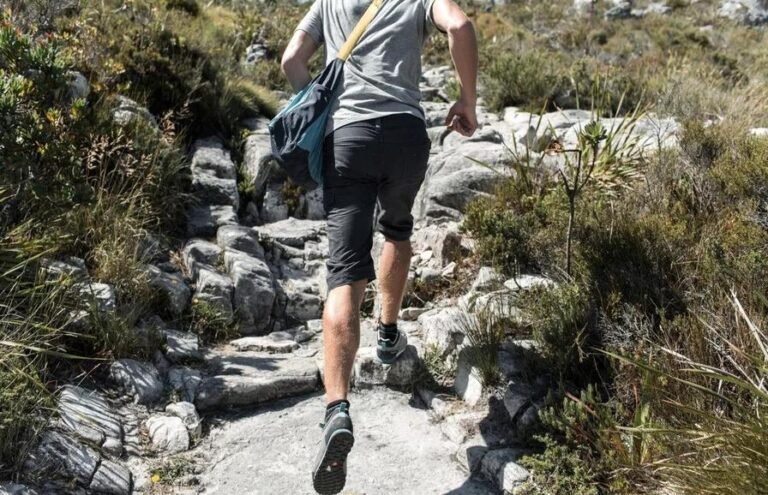
If you’re hiking with your pack on your back, the rule is simple: go as light as humanly possible. The longer your route, the more ruthless your packing must be.
Here’s the secret most beginners miss: you don’t need a pot. You need a really big mug.
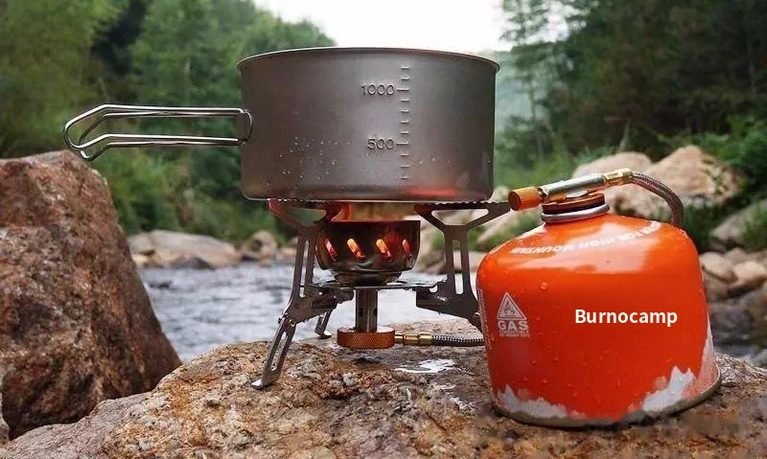
Most backpackers use an alcohol stove kit — the whole stove nests inside a pot, and the whole thing packs down to almost nothing. The pot is really just a large mug: boil water, steep your tea or noodles, eat, clean, and go. Because the stove lives inside the pot, your kit is compact, light, and self-contained. There’s no need to carry a separate pot at all.
If your destination is tougher — high altitude, snowfields, serious mountains — you’ll likely carry a split-type gas stove instead, for the reliable cold-weather performance. In that case, you still only need one large mug, or a stove kit that includes one. Same idea: one vessel, multiple jobs.
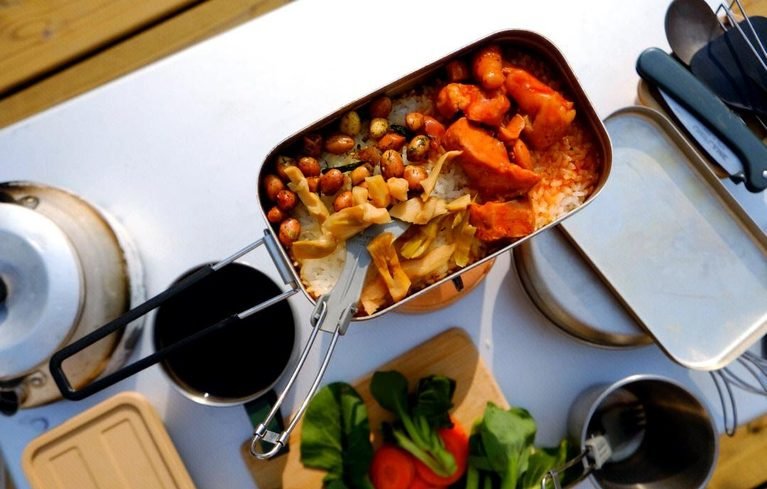
Another classic: the military-style canteen cup — a metal cup that can be used as a water bottle and a cooking vessel. Its key feature is a fold-out handle, so you can lift it off the fire without burning your hand.
The takeaway for backpackers: carry exactly one pot. Not two. Two pots are double the weight and double the space, and on the trail that’s a luxury you can’t afford.
A few packing tricks for the trail: carry the stove inside the pot (this is why the classic alcohol stove kit is so popular), use the pot lid as a plate and the pot as your bowl, and wrap the whole thing in a stuff sack so nothing rattles against your tent or pack frame. When you eat straight from the pot, you also save washing up — one vessel, one rinse, back on the trail.
The Car Camper’s Kitchen: Bring Everything (Within Reason)
Now the other end of the spectrum. You’re driving to a campsite, and chances are you’re not camping alone — friends, family, maybe a campfire and some drinks. This is the time to bring a proper kitchen, because nothing kills the mood faster than realizing you left the coffee pot at home.
Here’s what a well-equipped car-camping kitchen looks like:
1. A nesting cook set
A typical set includes a stew pot, a frying pan, and a kettle. The number of pots should match your stove count — if you only have one burner, three pots is already plenty; more pots than burners means pots sitting around cold. Cooking for a bigger crowd? Buy a bigger set — but plan on bringing extra stoves to match.
Choosing a stove to go with your pots? Check out our full guide: The Ultimate Guide to Camping Stoves: Types, Pros, Cons, and Real-World Tips
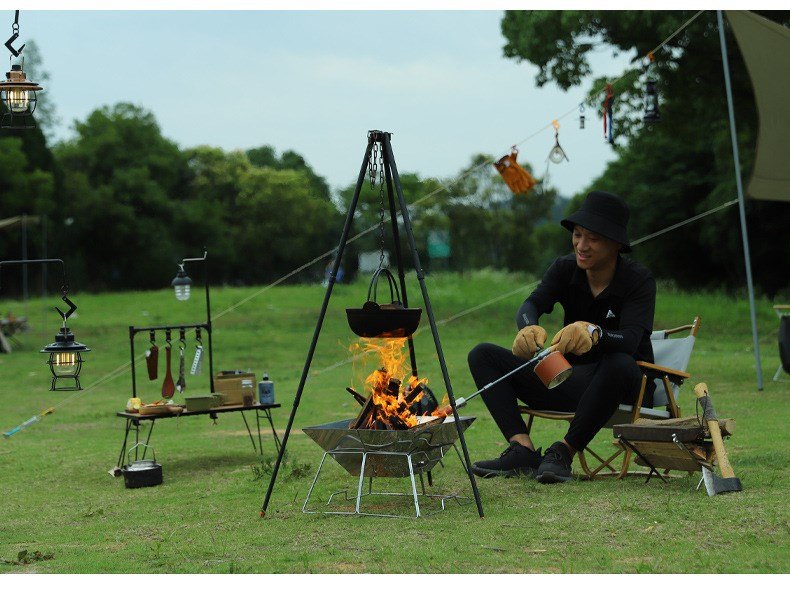
2. A tripod hanging pot
Heavy, a bit of a hassle to pack — but it looks fantastic. There’s something deeply satisfying about a blackened pot swinging over an open campfire, especially on a chilly night when the fire is crackling. This is atmosphere gear, and it earns its place.
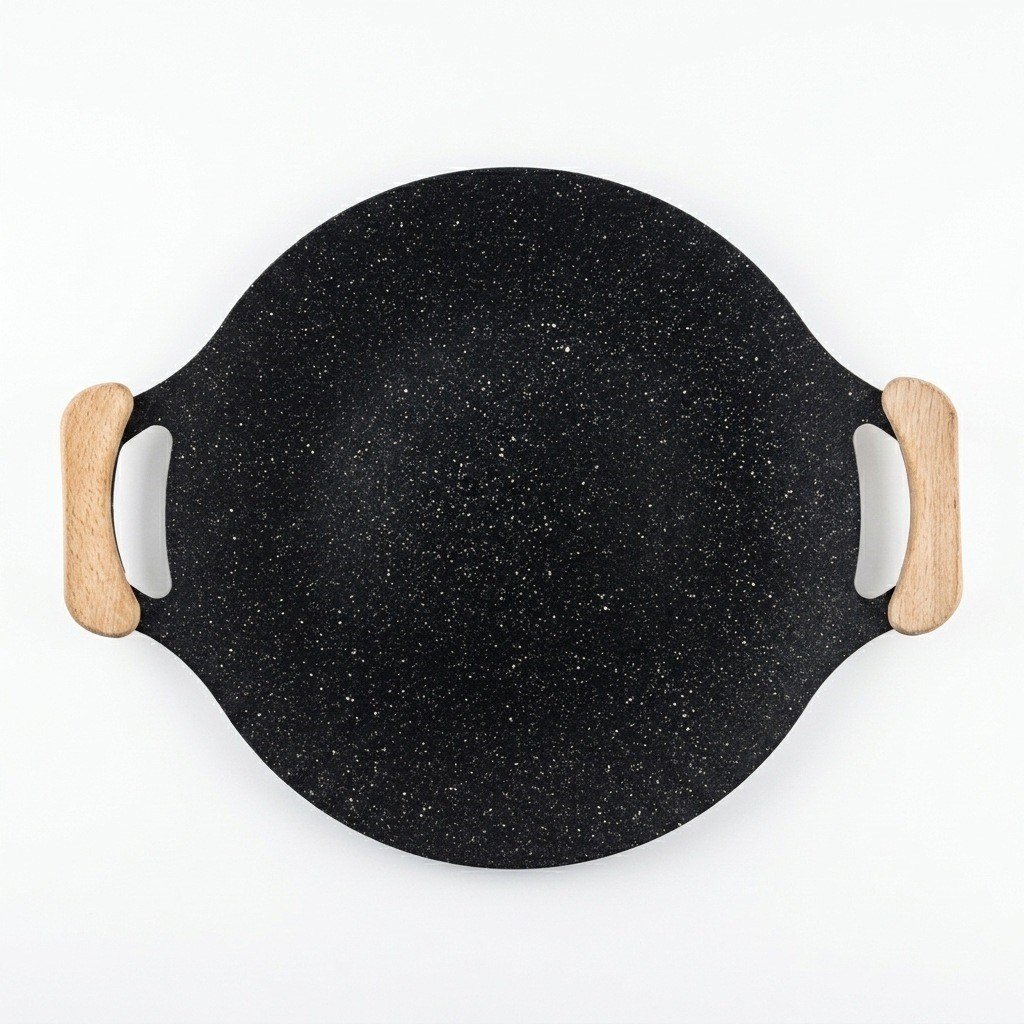
3. A grill pan or sandwich iron
Caught a fish on your fishing rod? Grilled bread, campfire toasties, a proper BBQ — a grill pan or a sandwich iron is non-negotiable if you want that smoky, over-the-fire cooking experience. Camping without at least a little BBQ just feels like something’s missing.
4. A steel mug
Every camp kitchen needs at least one good steel mug — for coffee in the morning, tea at night, and the odd cup of soup. It’s the most-used item on any trip.
If you’re just starting your car-camping kitchen, don’t buy everything at once. Start with a 3-piece nesting set and one steel mug — that covers 90% of campsite meals. Add the tripod pot and grill pan later, once you know your cooking style around the fire. The gear you actually use is the gear that earns its place in the car.
The Materials Guide: Titanium, Aluminum, Stainless Steel, and Non-Stick
Outdoor cookware comes in several materials, from budget to premium, and plenty of people can’t tell them apart. Here’s the plain-language breakdown.
Titanium: Light, Tough, Fuel-Efficient — and Expensive
Titanium is the most popular premium material in outdoor cookware right now. As a raw material, it’s incredibly light — yet despite the low weight, it’s about as strong as steel and famous for its corrosion resistance.
Because titanium itself doesn’t conduct heat especially well, titanium pots are made very thin, which lets heat transfer efficiently without wasting fuel. That’s the fuel-efficiency trick: thin walls mean less metal to heat up.
The trade-offs:
- Uneven heating — titanium’s heat distribution is mediocre, and beginners will burn food more easily than they expect
- Cost — titanium cookware is usually the most expensive option on the shelf
Titanium is generally considered safe for cooking, and it’s the best choice for backpacking, hiking, and long-distance trips where every gram counts.
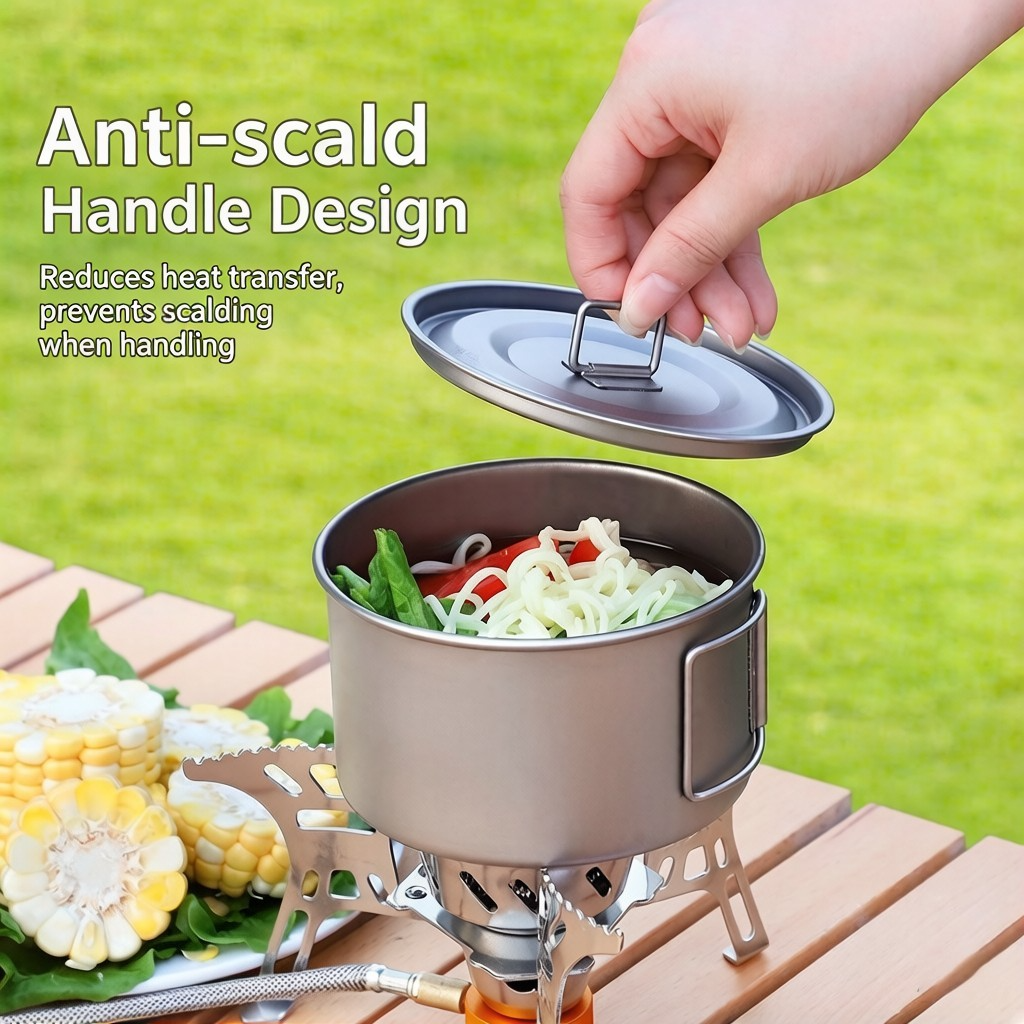
Aluminum: Bigger, Lighter, Cheap — with a Durability Catch
Aluminum pots are made of anodized aluminum oxide, and they’re often larger and lighter than titanium pieces at the same volume. Aluminum is genuinely pleasant to cook with because it heats evenly — that’s why aluminum has always been a favorite in kitchens everywhere.
The trade-offs:
- Soft and prone to dents — drop an aluminum pot and it’ll look terrible
- Durability is middling — it’s the least durable of the three metals
But here’s the good news about the old health worry: there used to be claims that aluminum causes developmental issues in children, and people worried the metal would leach into food. Modern cookware is anodized, which hardens the surface and makes the pot far more durable — and the anodized layer also means aluminum is not easily absorbed into your food. That concern is effectively retired.
Aluminum is the best value pick — cheap, light, and generous in size, which matters when you’re boiling water for a whole group.
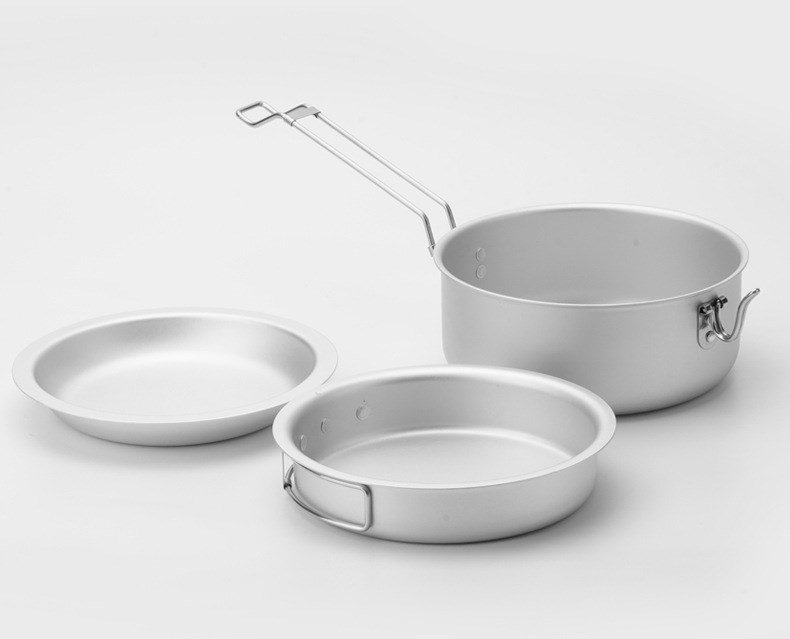
Stainless Steel: Healthy, Affordable, Durable — Just Heavy
The famous “304 stainless steel” you see stamped on cookware and mugs is the workhorse of home kitchens. It’s scratch-resistant, cut-resistant, cheap, and durable — and there’s essentially no evidence that stainless steel is harmful for cooking.
Stainless does contain iron and nickel, and tiny amounts can migrate into food — but the quantities are so microscopic they’re not a practical concern. Clean it gently with water and dish soap. Avoid abrasive steel wool and harsh chemicals, which can scratch the finish and weaken the surface over time.
The one big catch: stainless steel is heavy. For the same size, it’s noticeably heavier than titanium or aluminum, which makes it a better fit for car camping than backpacking.
Non-Stick Coatings: Convenient, but We’d Skip Them
Some pots come with a non-stick coating (like Teflon) to keep food from sticking and make cleanup easier. It works — cleaning a non-stick pan after eggs is a joy.
But here’s why we advise avoiding non-stick camping cookware:
- It doesn’t last — the coating eventually peels, and once it starts flaking, the pot has to be thrown out
- The safety question — PFOA, a chemical historically used to make non-stick coatings, is a suspected carcinogen
Modern non-stick pots are much less common than they used to be, but if you’re shopping and see one, know what you’re signing up for. For camp use, a bare-metal pot with a little oil does the job just fine.
Care Tips That Make Your Cookware Last
Whatever material you choose, a few simple habits keep it in shape for years:
- Clean gently — warm water and dish soap; skip abrasive scrubbers on aluminum and non-stick surfaces
- Dry thoroughly — especially stainless and titanium, to avoid water spots and keep them looking new
- Store nested — keep pots stacked with a soft cloth or paper towel between them so they don’t scratch each other
- Check your handles — loose handles and folding mechanisms are the first thing to fail; tighten or replace them before a trip
- Let coated pots go — the moment a non-stick coating peels, retire the pot rather than cooking on flaking coating
Quick Reference: Which Material for You?
| Material | Weight | Durability | Heat Behavior | Cost | Best For |
| Titanium | ★ Lightest | ★★★ Strong | Uneven, fuel-efficient | High | Backpacking, hiking |
| Aluminum | ★★ Light | ★ Middling | Even heating | Low | Budget, group cooking |
| Stainless Steel | ★★★ Heavy | ★★★ Tough | Good, holds heat | Mid | Car camping, daily use |
| Non-stick | ★★ Light | ★ Short-lived | Convenient | Low-Mid | Skip for camping |
Final Thoughts
There is no single “best” cookware — there’s only the right cookware for your trip.
- Backpacking or long treks? One titanium mug-pot and an alcohol stove kit. Nothing more.
- Car camping with friends? A nesting cook set, a tripod hanging pot for the fire, a grill pan, and a steel mug.
- On a budget? Anodized aluminum gets you 90% of the way there for a fraction of the price.
- Want durability and no fuss? Stainless steel is safe, cheap, and tough — just don’t expect to carry it far.
Remember the golden rule: one pot for the trail, a full kitchen for the camp. Match your cookware to your style of camping, and every meal outdoors gets easier.
Happy cooking. Stay light, stay fed, and stay safe out there.