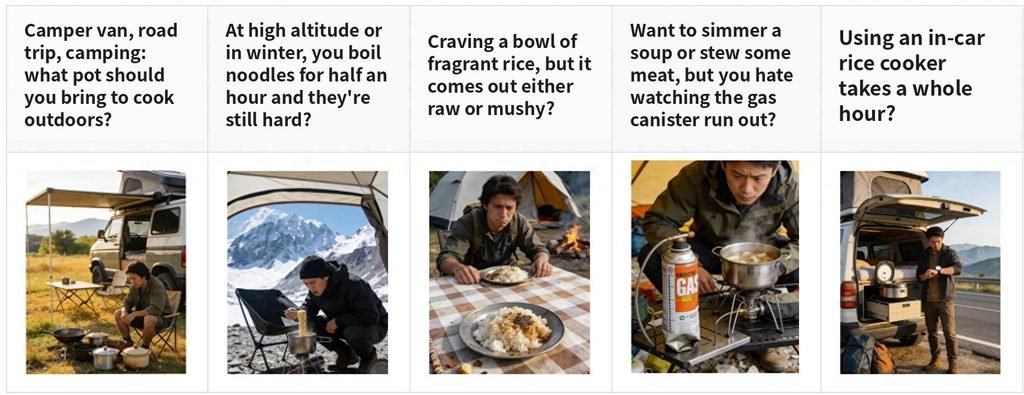
Ever tried cooking rice outdoors, only to end up with a pot of crunchy grains or a mushy mess? Or boiled noodles for half an hour at high altitude and they were still hard? You’re not alone. After years of road trips and plenty of cooking mistakes, many experienced campers land on the same answer: a camping pressure cooker. Here’s why it’s worth the space in your van or trunk, and how to choose and use one safely.
Why a Camping Pressure Cooker Beats a Regular Pot
Remember these three points, and you’ll see why it’s such a favorite on the road:
- It’s fast. Rice takes only about 5 to 8 minutes under pressure. A regular pot might struggle for half an hour and still leave you with undercooked rice, while a pressure cooker finishes in a few minutes once it comes up to pressure.
- It saves energy. Shorter cooking time means less gas or electricity. When you’re camping, fuel is both money and peace of mind.
- It does almost everything. Rice, soup, braised meat, steamed buns, even boiling water. One pot can act as your whole outdoor kitchen.
How to Choose a Camping Pressure Cooker
1. Go bigger, not smaller
Skip the tiny “outdoor” pressure cookers. They look cute, but they fill up fast, and you’ll quickly find they can’t cook enough. A full-size cooker holds more, cooks more food, and is generally safer. A 20cm pot (around 4 liters is a good target) works well for one person and is still enough for a family of three. For example, the Burnocamp 20cm outdoor pressure cooker falls right in that range.
2. Choose stainless steel over aluminum
Stainless steel is more durable and easier to clean. Before you buy, check that it works on both induction cooktops and open flames, so you can use it on a camp stove, at a campsite with power, or at home.
3. Pick a trusted brand
Stick with a reliable brand that has a track record for build quality and safety. A well-made pressure cooker should feel solid, seal properly, and come with clear instructions. A good seal and a dependable valve are not places to save money.
Camping Pressure Cooker Safety: The Golden Rules
A pressure cooker is a great tool when used right, but it needs respect. Keep these rules in mind:
- Don’t overfill it. Never fill the pot more than two-thirds full. For foods that expand or foam, like rice and beans, keep it to half or less.
- Keep the pressure valve clear. Grains of rice or beans must never block the vent. A blocked valve means pressure can’t escape, which is dangerous.
- Check before every use. Look at the sealing ring, and make sure the valve is open and clean.
- Let pressure release naturally. Be patient and let the cooker cool down by itself before you open the lid.
Bonus: Quick, Fluffy Rice on the Road
Want fluffy rice with almost no fuss? A steamer basket makes it easy. Pick one that’s slightly smaller than your pot, then follow these steps:
- Prep: Rinse the rice and place it in the steamer basket inside the cooker. Add water until it just covers the surface of the rice. (Check your cooker’s manual for the minimum amount of liquid.)
- Heat: Cook on high heat until it builds pressure and the valve starts steadily releasing steam.
- Cook: Turn the heat to the lowest setting right away and time 5 minutes, then turn off the heat.
- Rest: Don’t open the lid yet. Let the rice sit in the leftover heat for 5 to 10 minutes. This makes it softer and more fragrant.
Camping Pressure Cooker at High Altitude: A Must-Have
Heading to high-altitude regions like Tibet, Xinjiang, or western Sichuan? A pressure cooker isn’t just nice to have, it’s close to essential. The air pressure is low up there, so water can boil at only around 80 to 90°C. At that temperature, a regular pot simply can’t cook rice or meat properly. A camping pressure cooker raises the pressure inside the pot, which raises the boiling point, so you still get a hot, tasty meal in the mountains.
Pair it with a reliable gas stove for steady open-flame cooking, and you’re ready to go anywhere.
The Takeaway
If you only bring one pot on your next road trip, make it a camping pressure cooker. It’s fast, saves fuel, and handles rice, soup, and stews with ease. Choose a larger stainless steel model that works on both induction and open flames, follow the safety rules, and you’ll eat well wherever you park. Once you’ve got your pressure cooker, you can build out the rest of your kitchen with some compact camping cookware that packs down small.